by LEIGH ANN MATTHEWS
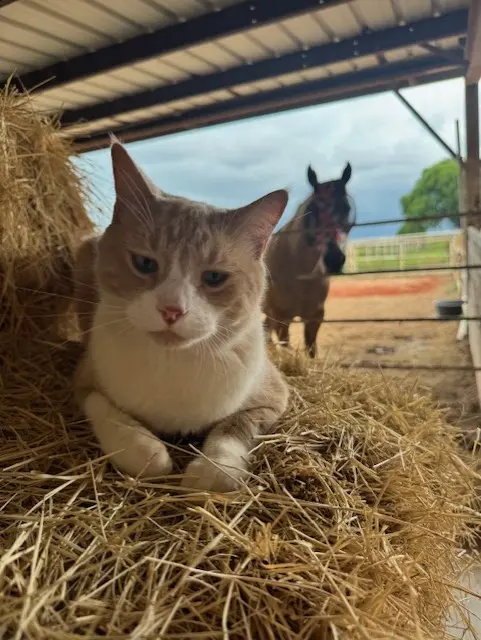
What can be said about barn cats? Plenty. These rugged, independent and resourceful felines are an integral part of many horse barns, playing a critical role in rodent and pest control and adding to the overall harmony in the barn. As feline guardians of the grain bins, their presence alone can discourage unwanted critters, while their movement throughout the barn helps deter other pests from sticking around.
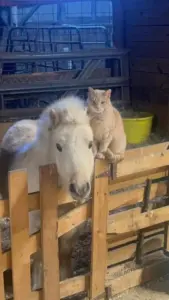
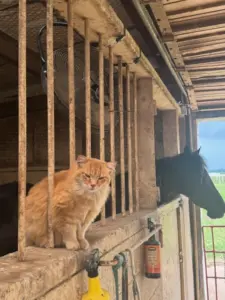
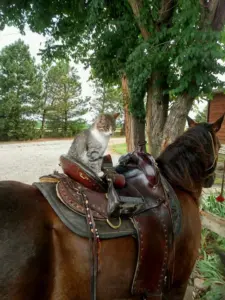
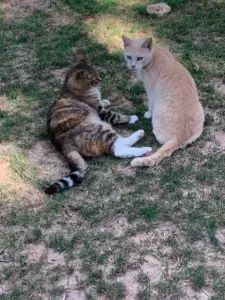
Rodent control isn’t their only contribution to a peaceful, harmonious barn. Some cats bond with horses, offering companionship during stalled time. It’s common for a cat to have a favorite equine friend and choose to climb the stall door and perch near the animal’s face. They also often bond with dogs who visit the barn and may enjoy games of hide and seek or chase with the dogs.
Cats that are raised in the barn, or are acclimated at a young age, often become very independent and dedicated to their careers. They are quick to communicate that humans are not necessary in their lives, but most still appreciate occasional petting and attention from the barn humans.
But even the most independent barn cat should not be left to fend for itself completely. Although some seem content with hunting and prefer to maintain a diet of their own delicacies, it’s important to provide nutritional cat food in addition to water and shelter. This is especially important during the colder months as prey can be scarce. To avoid harming their reputations, many of the great hunters will not eat cat food in your presence but will wait till all humans have left the building.
Most barn cats spend their days lazing around the barn, napping, playing and doing a whole lot of nothing. Some prefer to set their own work schedules and may just be resting up to work the late-night shift. They seem to sense when outside critters are about to invade their paradise and adjust their patrols accordingly.
Dr. AJ Bukenhofer of Equine Integrative Veterinary Service emphasizes the importance of keeping barn cats vaccinated, spayed or neutered, and protected against fleas and ticks.
“Feeding them at the same time every day makes it easier to do wellness checks on them and make sure they are injury-free and ready to work. It also helps those less fond of humans ease their shyness and become easier to capture for routine care,” Bukenhofer explains. “Feeding in a tack room or other confined area may make it easier to capture the ones with feral behavior if needed, and it’s better for the cat if any kind of confined treatment is necessary as the area will be familiar to them.”
Barn life can be dangerous for kittens, so Bukenhofer recommends raising and socializing them in a smaller area before turning them loose with the horses, dogs and other cats. It’s also easier to ensure they get plenty of nutrition for healthy growth until they learn their job. Getting them altered as soon as possible is important to avoid unwanted litters and injuries among fighting males.
Jessica King of Sunset Ranch in Norman says their team of barn cats has been essential in keeping mice and other rodents under control. When she and her business partner Mary Westman purchased the 160-acre property, there was one resident cat already in place.
“We reached out to the Norman Animal Shelter and adopted several cats that were less likely to be placed into homes,” King explains. “We started them out indoors to help them acclimate, make sure they were socialized, easy to care for, and allowed them to settle in and establish their residency. We keep their vaccinations current, provide flea and tick treatment, and feed them every day.”
“They all take their jobs seriously,” she adds. “It’s fascinating how they seem to have their own system. After feeding, they don’t stick together; each cat heads off to its own territory, almost like they’re working assigned patrols.”
Sunset Ranch maintains a crew of eight cats to manage pests across several barns and an indoor arena. King emphasizes the importance of striking the right balance: enough cats to keep rodents away but not so many that they compete for resources. The ranch also provides heated shelters during the winter to keep the cats safe and warm.
Because Sunset Ranch boards horses for clients, King says having well-socialized barn cats is a real asset.
“Many of our boarders don’t have small pets at home, so they really enjoy spending time with the cats. It adds to the atmosphere,” she says. “Cats are a far safer option than using poison, especially with so many other animals on the property. They’ve become a vital part of how we keep the place clean and healthy.”
If you’ve got a barn — whether it’s home to horses, goats, llamas, show cattle or anything else — and you’re dealing with unwanted guests like mice, rats or even snakes, remember: just a couple of good barn cats can help take control of the situation and make your barn safer for both you and your animals. It’s OK for them to be friendly; the good ones will still take care of business.
Good barn cats will spend their lives taking care of your barn, so don’t forget to take care of them.